
Our Product Portfolio
Pharmaceutical
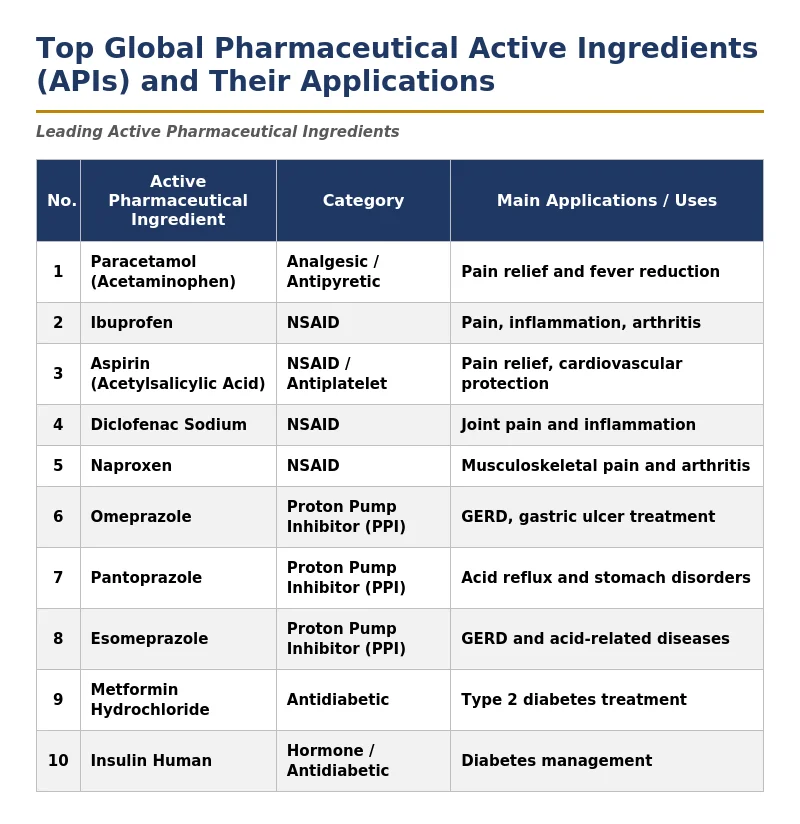
Procurement support for APIs, excipients, and intermediates, fully compliant with international regulatory standards and licensing requirements.
Food
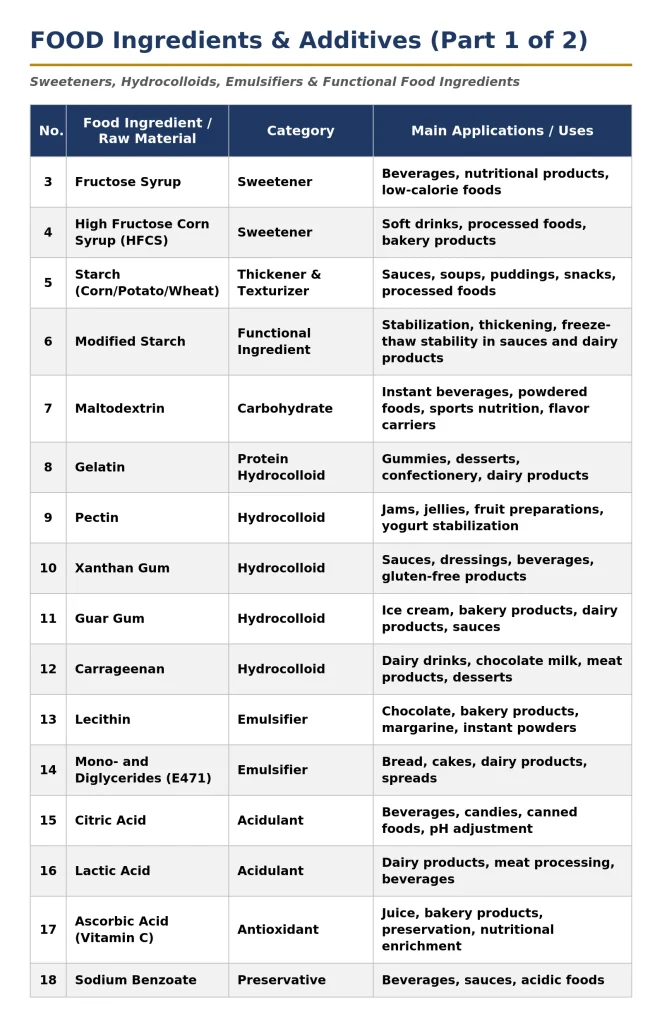
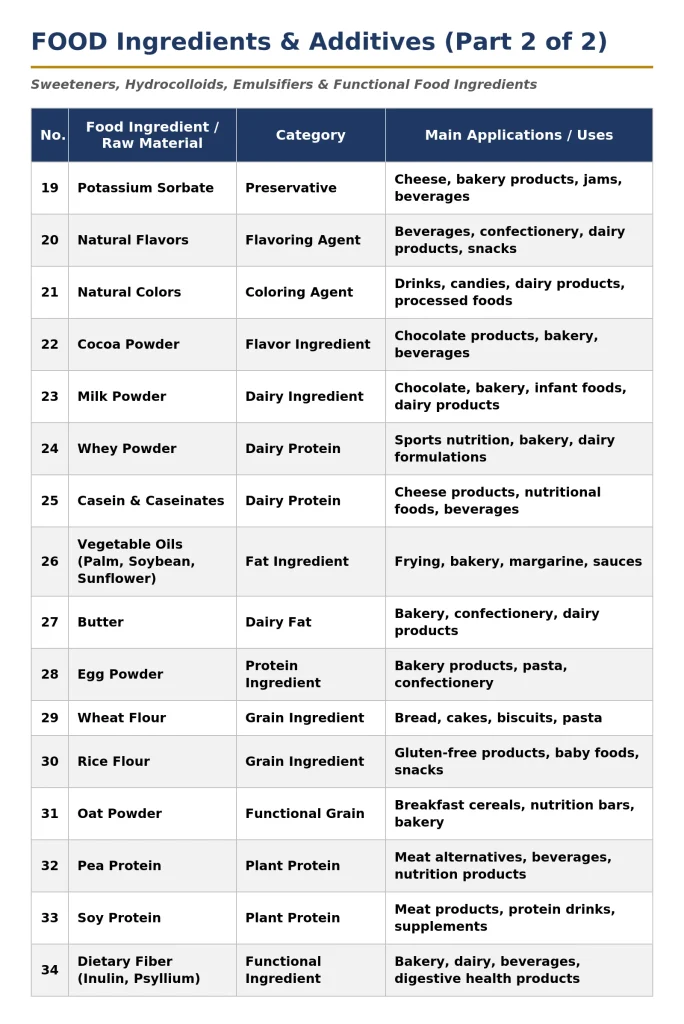
Supplying food-grade raw materials, additives, and preservatives for the food industry, ensuring quality and safety standards.
Supplements
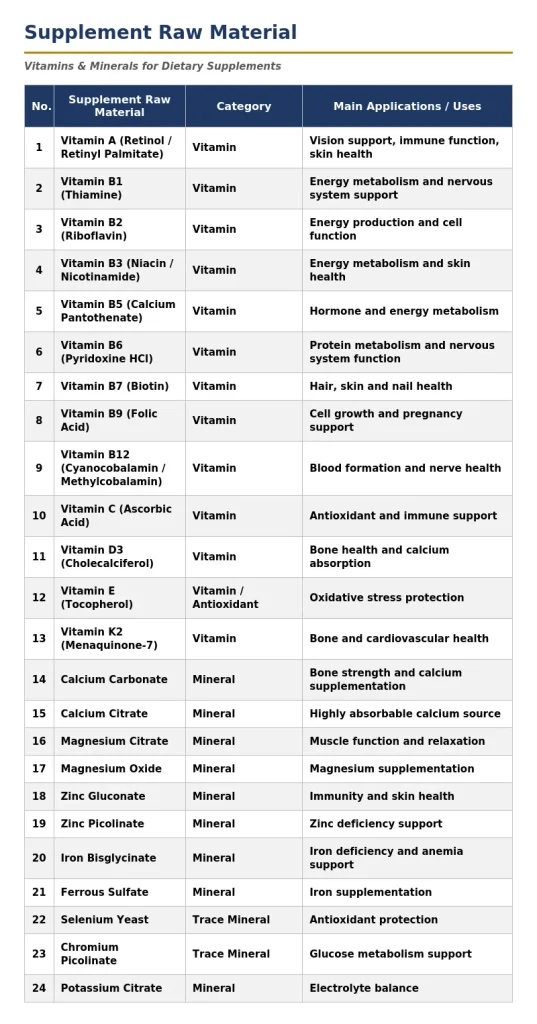
High-quality supplement ingredients, including vitamins, minerals, proteins, and functional blends, sourced through reliable global supply networks for the nutraceutical industry.
Veterinary Products
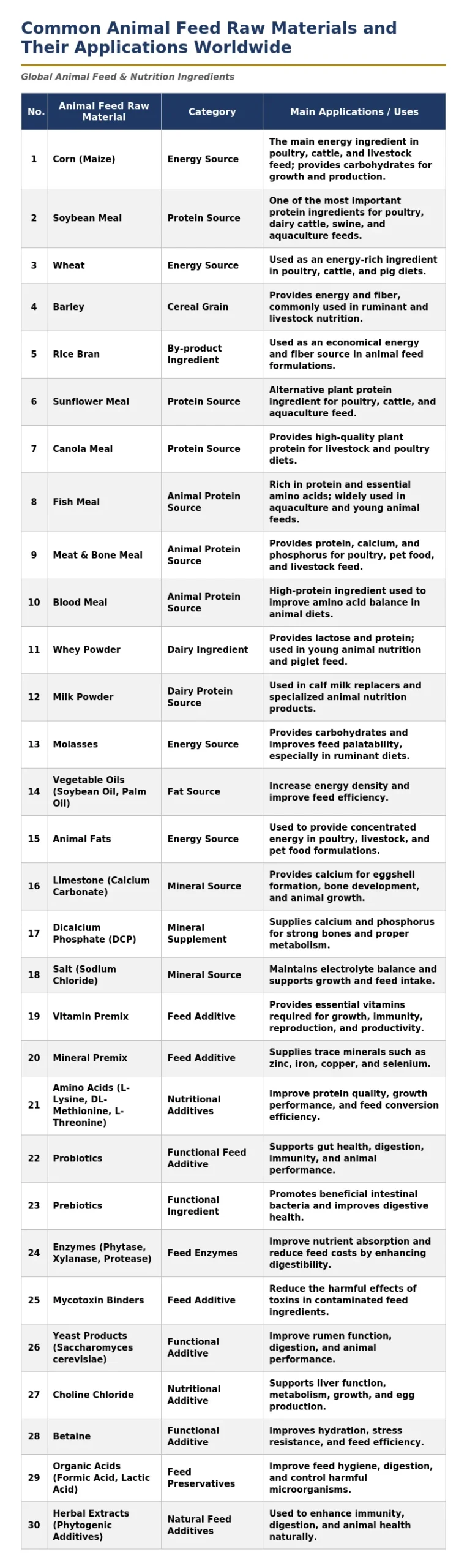
Providing specialty ingredients and raw materials for animal health and nutrition, supporting veterinary pharmaceutical and feed industries.
Hygienic & Cosmetic
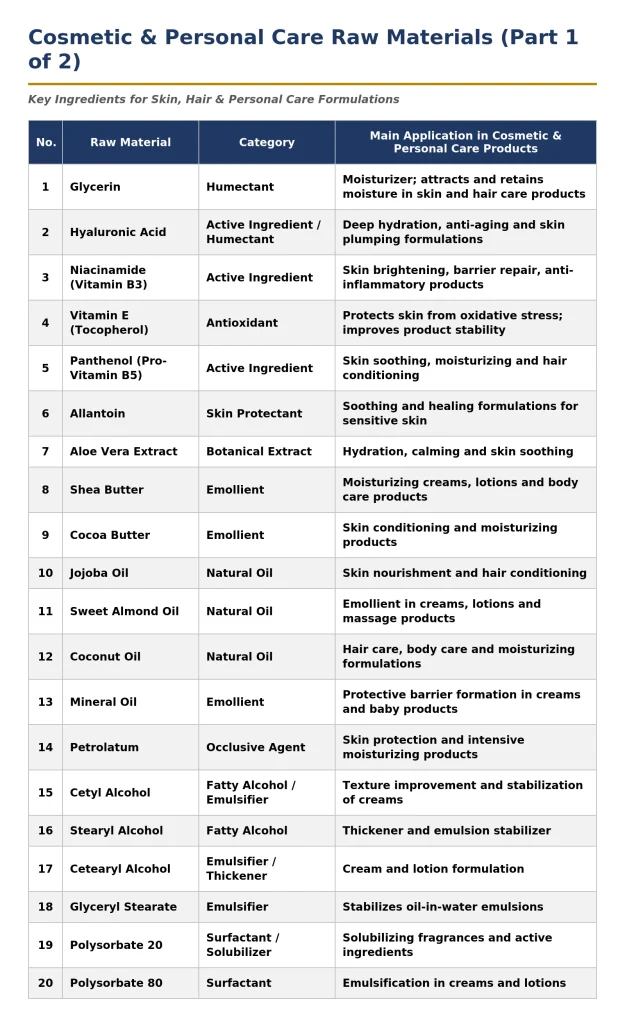
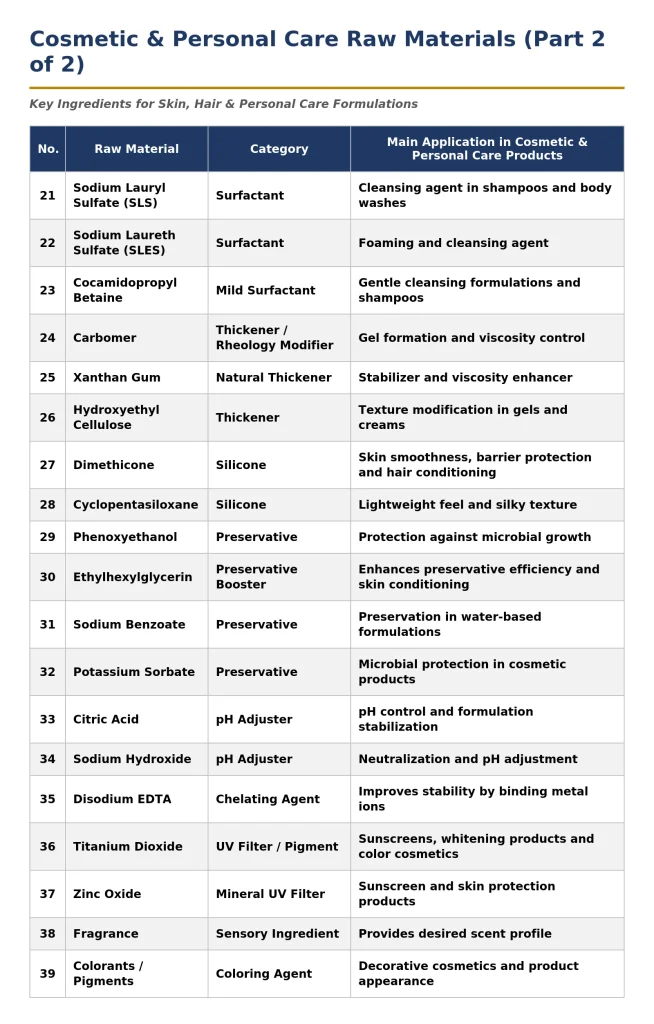
Sourcing active ingredients, emollients, and surfactants for personal care and cosmetic formulations.
Pharmaceutical Equipment
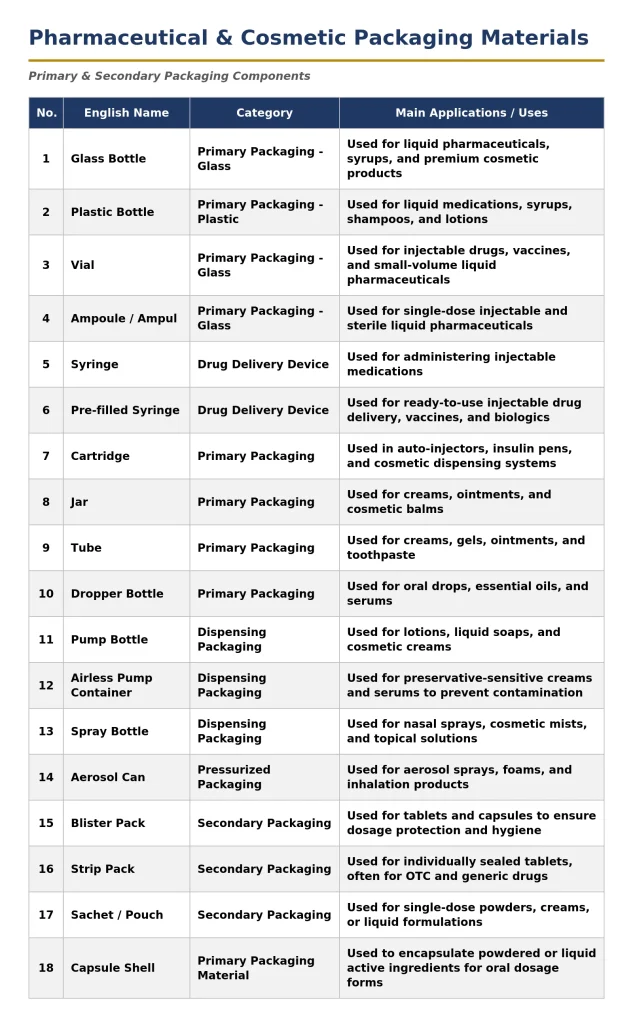
High-quality pharmaceutical equipment designed to support safe, efficient, and compliant manufacturing, processing, packaging, and quality control.
What We Offer
Pharmaceuticals
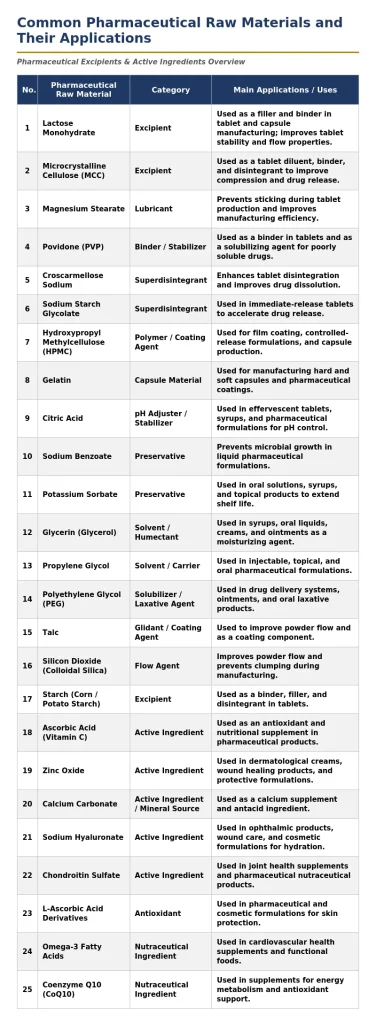
Pharmaceutical products are substances used to prevent, diagnose, manage, or treat diseases. This category includes Active Pharmaceutical Ingredients (APIs) and excipients. APIs are the biologically active substances responsible for the therapeutic effect of a medicine, such as paracetamol for pain relief or amoxicillin for bacterial infections. Excipients are inactive substances added to improve the stability, appearance, taste, manufacturing process, or delivery of the final dosage form. Examples include lactose as a filler, magnesium stearate as a lubricant, and cellulose as a tablet binder.
Illustration:
API + Excipients → Tablet, capsule, syrup, cream, or injectable medicine
Pharmaceutical excipients
A pharmaceutical excipient is an inactive substance added to a medicine alongside the active pharmaceutical ingredient (API) to help manufacture, stabilize, preserve, deliver, or improve the acceptability of the product. Excipients may act as fillers, binders, coatings, preservatives, sweeteners, colorants, disintegrants, or solvents, and they can affect properties such as tablet strength, drug release, taste, shelf life, and absorption. Common examples include lactose, starch, magnesium stearate, cellulose, gelatin, and purified water. Although excipients do not provide the main therapeutic effect, they must be carefully selected because some patients may have allergies or intolerances to certain excipients.
Supplements
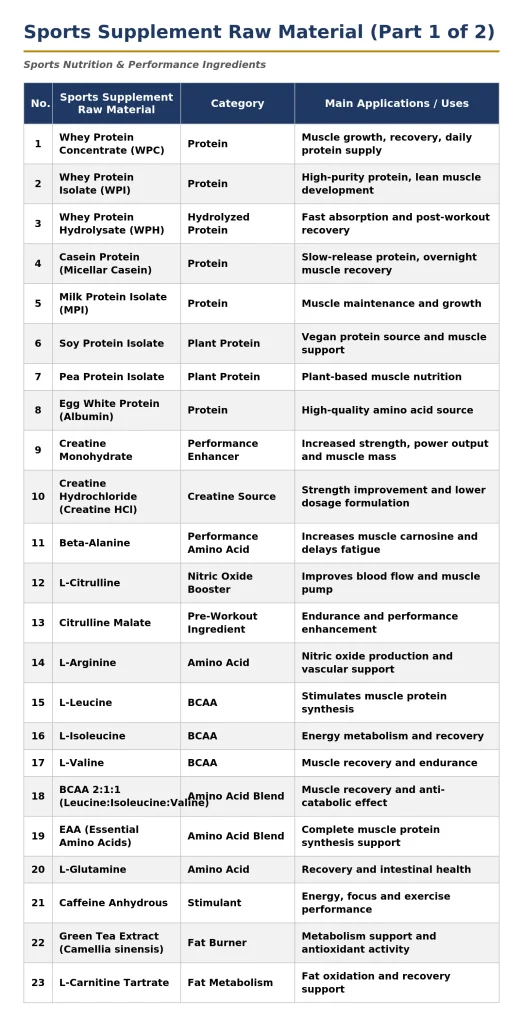
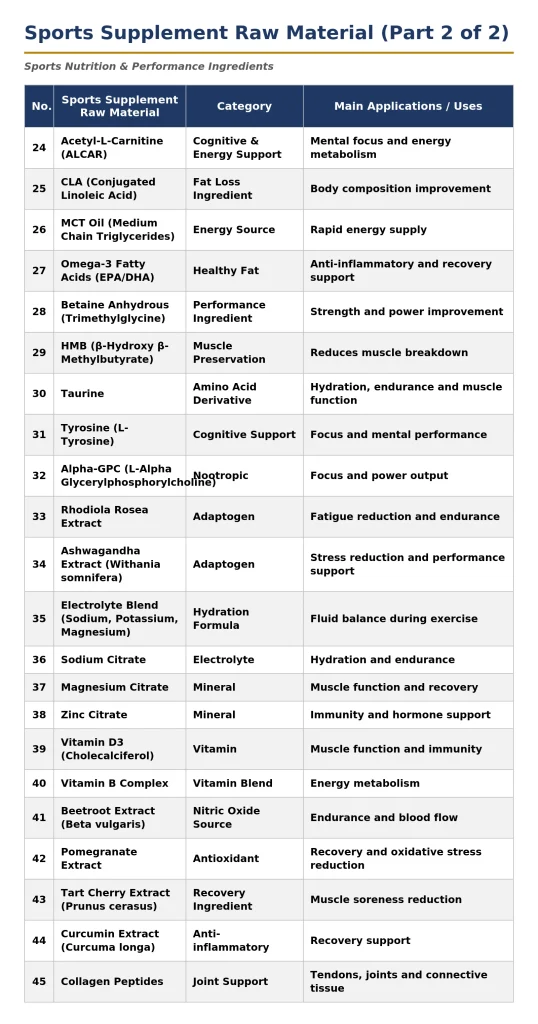
Supplements are products designed to complement a person’s regular diet by providing concentrated sources of nutrients or other functional ingredients. This category includes sports supplements, such as protein powders, creatine, amino acids, and electrolyte products; premixes, which are prepared blends of vitamins, minerals, and functional ingredients for use in food or supplement production; and vitamins, such as vitamins A, C, D, E, and the B-complex group. Supplements may support general health, nutritional requirements, physical performance, or recovery, but they should not be presented as substitutes for a balanced diet or as medicines unless officially registered for therapeutic use.
Illustration:
A. Sports supplements → Protein, creatine, amino acids, electrolytes
B. Premixes → Vitamin-mineral blends for fortified products
C. Vitamins → Vitamin C, vitamin D₃, vitamin E, and B-complex
Veterinary Products
Veterinary products are substances and preparations developed for the prevention, diagnosis, management, or treatment of diseases in animals. They may include veterinary APIs, medicines, vaccines, feed additives, nutritional products, disinf
Pharmaceutical excipients A pharmaceutical excipient is an inactive substance added to a medicine alongside the active pharmaceutical ingredient (API) to help manufacture, stabilize, preserve, deliver, or improve the acceptability of the product. Excipients may act as fillers, binders, coatings, preservatives, sweeteners, colorants, disintegrants, or solvents, and they can affect properties such as tablet strength, drug release, taste, shelf life, and absorption. Common examples include lactose, starch, magnesium stearate, cellulose, gelatin, and purified water. Although excipients do not provide the main therapeutic effect, they must be carefully selected because some patients may have allergies or intolerances to certain excipients.
NEXSAVIRO GLOBAL LTD
Bridging Nature, Science and Industry for a Healthier Tomorrow